
የዛሬ ፋኖወች ድል እና የአድዋ ድል መገጣጠም – ሳምንታዊው የአድማጮች ክፍለ ጊዜ

Read Time:
1 Min
ANKARA (Al Monitor) — Turkey and Somalia on Thursday signed a cooperation deal on defense amid lingering tensions in the Horn of Africa over a controversial agreement between Ethiopia and the breakaway region of Somaliland.
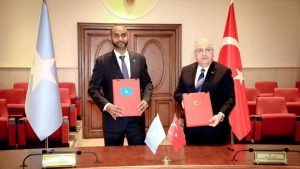
The Defense and Economic Cooperation Framework Agreement was signed between Turkish Defense Minister Yasar Guler and his Somali counterpart, Abdulkadir Mohamed Nur, who paid an official visit to Ankara.
“The agreement we signed today involves cooperation on the fight against terrorism and military-financial cooperation,” Nur said, speaking at a joint press conference. “We believe that the agreement will contribute greatly to Somalia.”
Guler, who described the two defense chiefs’ meeting as “fruitful,” said that the deal “will further improve” bilateral military relations between the two countries.
“Somalia is an important partner of Turkey in Africa,” he added, reiterating his country’s support for the African country’s territorial integrity and sovereignty.
Turkey-educated Nur’s visit to Ankara comes as tensions in the Horn of Africa are simmering over a Jan. 1 deal signed between Somaliland and Ethiopia that would grant Addis Ababa access to the Red Sea in return for the recognition of breakaway Somaliland.
Somalia, which doesn’t recognize the de facto republic, rejected the agreement as a violation of its sovereignty. Ankara publicly backed the territorial integrity of Somalia in the face of tensions. Somalia — one of the few countries to host a Turkish military base — maintains close military and economic cooperation with Turkey.
Addis Dimts is an independent multimedia outlet that has proudly served as a voice for the voiceless and a source of empowerment for the Ethiopian community worldwide for over three decades.
The United States Government voiced concern on Friday regarding the “targeted civilian killings” occurring in the northern Ethiopian town of Merawi. Urging Ethiopian authorities to grant access to human rights monitors in the region, the US emphasized the necessity for transparency and accountability.

In a statement released on social media platform X, US Ambassador to Ethiopia, Ervin Massinga, conveyed the US government’s concern over the reported civilian killings in Merawi. Massinga stressed the urgent need for unrestricted access for independent human rights monitors and called for an impartial investigation to ensure those responsible are held accountable for their actions.
The reported atrocities in Merawi, situated in the Amhara region, come after a series of clashes last year between Ethiopia’s military and an ethnic Amhara self-defense militia known as Fano. These confrontations prompted the federal government to declare a state of emergency in August, which was recently extended by lawmakers for an additional four months.
Although specific details about the incidents in Merawi are scant, local media sources have indicated that government forces allegedly carried out door-to-door searches for Fano supporters, resulting in the deaths of numerous civilians.
Access to media in the Amhara region of 40 million people remains severely restricted by authorities, hampering independent verification of the situation on the ground.
Addis Dimts is an independent Ethiopian multimedia that has been serving the Ethiopian community around the world for the past three decades.
Addis Dimts Live – January 25, 2024
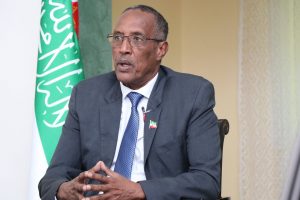 MOGADISHU, Somalia (AP) — The leader of Somaliland, a breakaway region in Somalia, has affirmed his government’s commitment to proceed with a recent agreement signed with landlocked Ethiopia. This agreement aims to grant Ethiopia access to the sea through the coastline of Somaliland.
Despite the agreement, there has been widespread condemnation from regional and international organizations, as well as Western nations. Critics argue that this accord infringes upon Somalia’s territorial integrity and has the potential to escalate tensions, posing a threat to stability in the Horn of Africa.
Somalia, in particular, has vehemently opposed the deal, viewing it as a challenge to its sovereignty. Somaliland, strategically situated along the Gulf of Aden, declared independence from Somalia in 1991 during the country’s descent into warlord-led conflict. It’s worth noting that Somaliland has not received international recognition as an independent state.